If there is one type of building that seems purpose-built for rooftop solar, it is the leisure centre. Swimming pools, gyms, sports halls and fitness studios consume large amounts of electricity throughout the day. Their rooftops are often extensive and unobstructed, so they are ideal solar panel locations. And they sit at the heart of their communities, welcoming thousands of visitors every week. On paper, they are ideal candidates for solar power.
Yet, despite their enormous potential, many leisure centres remain without renewable energy. Why? The answer lies in how these buildings are owned and operated.
The hidden challenge
Like many commercial buildings, leisure centres are rarely run by the organisation that owns them. Typically, the local authority owns the building, while day-to-day operations are managed by an independent operator like a leisure trust. These trusts often operate under long-term management contracts (5-10 years) and are responsible for the building’s energy bills. This creates a challenge.
The council may have limited budget and many competing priorities for investment. Because the energy savings are realised by the building operator rather than the building owner, rooftop solar can struggle to compete against other council investment priorities. Meanwhile, the leisure operator has every incentive to reduce energy costs and carbon emissions—but they don’t own the roof. The asset isn’t theirs to install, and contract lengths don’t always align neatly with the payback period for large installations. The result is a split incentive: everyone benefits from solar, but no single organisation is well placed to deliver it alone.
Community energy bridges the gap
This is exactly where community energy can make a real difference. Through a community solar lease, a community energy organisation finances, owns, installs and maintains the solar array. These organisations called co-operatives are run by local people, for local people.
Community energy co-operatives bridge the gap. The building owner doesn’t need to provide upfront capital, and the site operator purchases the electricity generated on the roof, at a lower price than grid electricity. This reduces operating costs from day one. Meanwhile the council benefits from a decarbonised public asset without needing to finance the installation.

Our family of local co-operatives come together to create local energy in their neighbourhoods
Not all solar is equal
A commercial solar lease delivers clean electricity. A community solar lease delivers clean electricity and social value. Rather than profits leaving the community, surplus income generated by the solar installation is reinvested locally through community benefit funds, educational programmes, fuel poverty initiatives, local grants and opportunities for residents to participate in the energy transition. Community ownership means local people have a genuine stake in their energy system, and members of the co-operative have a voice, and help shape how community benefit funds are used. Instead of simply installing infrastructure, community energy builds local wealth, resilience and participation.
Leisure centres in action
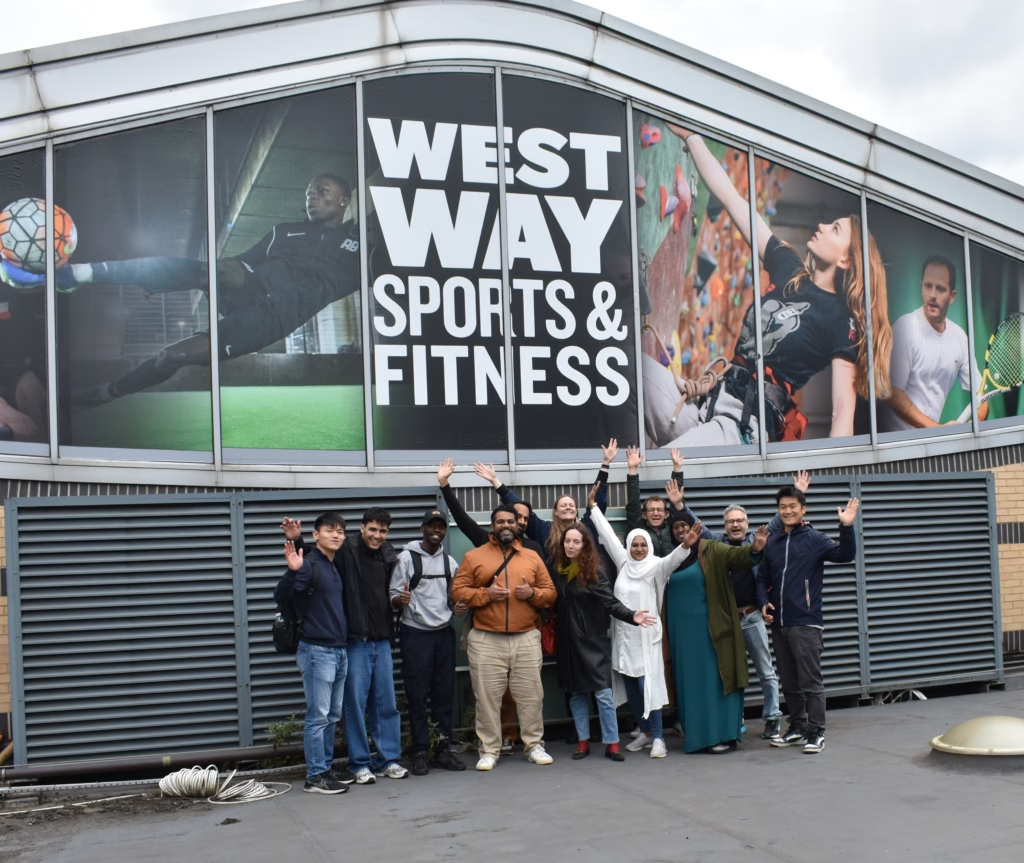
Repowering London has supported local community energy groups in North Kensington and Barnet to install solar PV on community leisure centres, working in mutually beneficial partnerships with local councils and operators.
- West Way Centre, operated by Everyone Active, has 502 solar panels (that’s 138 kWp) on its roof owned and maintained by North Kensington Community Energy, saving the site approx. £1000 a year on electricity and is estimated to produce in the region of £40,000 of community fund over its lifetime.
- Burnt Oak Leisure Centre, operated by GLL, has 220 solar panels (that’s 99kWP) on its roof, which will ultimately be owned by Community Energy Barnet, saving the site appox. £1000 a year on electricity.
Income from the West Way Centre project has supported a range of local initiatives, including funding a girls’ football team based at the very leisure centre where the solar panels are installed. It’s a powerful illustration of what community energy can achieve. These projects demonstrate how community energy can unlock decarbonisation for complex public buildings by bringing together building owners, leisure operators, community investors and funding partners.
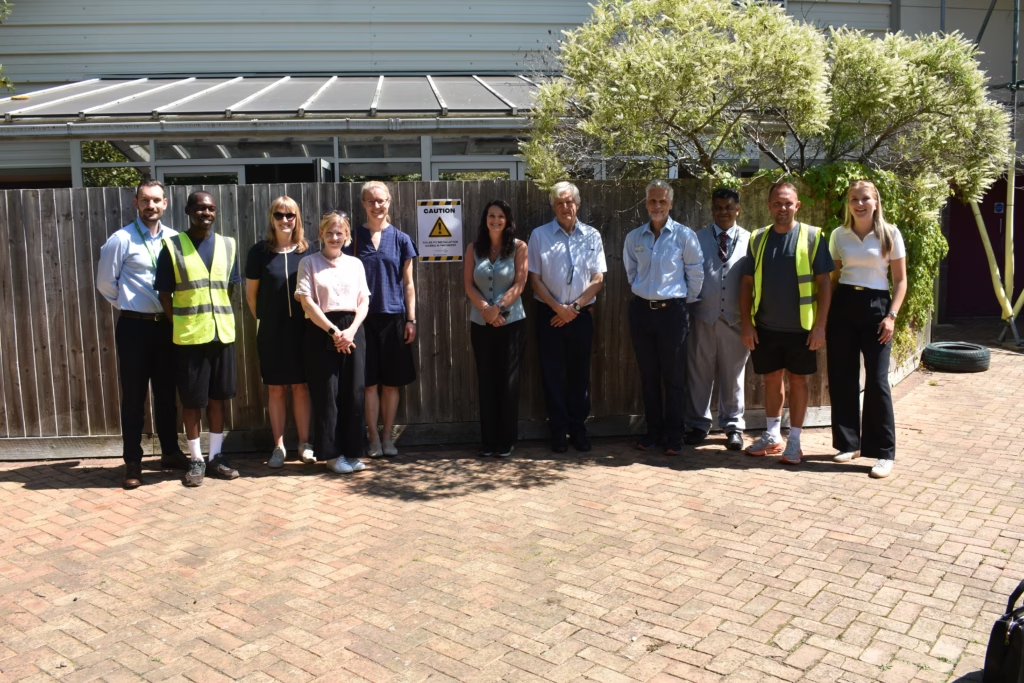
Burnt Oak Leisure Centre where a partnership between Barnet Council, GLL and Community Energy Barnet is flourishing
Shared values, shared impact
Many of the organisations operating leisure centres are themselves charities, trusts or social enterprises with strong social missions. Their goals extend far beyond running gyms. They improve health and wellbeing, tackle inequalities, support young people, provide community spaces and encourage active lifestyles. Community energy organisations share many of these same values. Both sectors exist to create social value. Both work to strengthen communities. Both invest in long-term local resilience. That makes community energy and leisure trusts not just compatible partners, but natural ones.
“Leisure centres are energy-intensive buildings, so finding practical ways to reduce both their carbon emissions and energy costs is a real priority for us. What is particularly exciting about the community energy model at Burnt Oak is that it goes beyond simply installing solar panels. By working with Barnet Council, Community Energy Barnet and Repowering London, we can generate clean electricity right here at the leisure centre, while helping to create wider benefits for the community we serve. As a charitable social enterprise, that combination of environmental, financial and social benefit really aligns with GLL's core values, 'Respecting the Planet' and being a 'Partner of Choice'. Burnt Oak is a great example of what can be achieved when councils, leisure operators and community energy organisations work together.”
Jeremy Gould, National Sustainability Manager, GLL Tweet
A fairer energy transition
At Repowering London, our mission is to create a fair, affordable, clean energy future for all. Leisure centres can be at the heart of that future. They are highly visible community assets, significant energy users and trusted public spaces. By combining community ownership with renewable energy, we can help councils reduce emissions, help operators to lower costs and ensure the financial benefits of clean energy remain within the communities that generate it.
Interested in working together?
If you own, manage or operate a leisure centre—or you’re a local authority exploring ways to decarbonise your estate—we’d love to hear from you. Community energy offers a proven, low-risk route to installing rooftop solar while creating lasting local benefit. Together, we can turn leisure centres into engines of the clean energy transition.
Email info@repowering.org.uk
We would like to thank our partners at Everyone Active and GLL, along with Barnet Council and Royal Borough of Kensington and Chelsea for helping to develop these mutually beneficial partnerships and demonstrating what is possible when organisations work together towards a shared vision of a cleaner, fairer future.